Cost advantage
30–50%
less than the fully loaded
cost of a US-based hire, typically
Lower total cost of delivery, from both directions.
Against a US-based hire
- No recruiting fees.
- No benefits overhead.
- No insurance costs on your side.
Against offshore
- Fewer engineers for the same output.
- Better code, written faster.
- Less rework.
Our engineers typically run 30–50% less than a US-based hire, and you typically need fewer of them than an offshore team to get the same output. The total cost of delivery is lower either way.
Get a proposal →Why staff augmentation
More capacity. The same control. Six situations where adding engineers to your own team is the right answer.
Expand capacity with embedded engineers
Engineers join your stand-ups, repositories and sprints and report to your leads. Capacity rises without a reorganization.
Fill skill gaps without a hiring cycle
Bring in a specialist in AI, data, mobile, cloud or QA for as long as the skill is needed, without opening a permanent role.
Add AI depth to your team
Engineers with production experience in LLM applications, machine learning and MLOps work alongside your developers.
Scale for major initiatives
Staff a launch, migration or new product line quickly, then reduce capacity when the work is complete.
Replace an underperforming vendor
Move to vetted senior engineers with a managed handover, so delivery continues while you change partner.
Collaborate in real time
A product or project manager in your time zone keeps communication live, wherever your engineers are based.
How we work
Three ways to engage. Staff augmentation is the lightest: you direct the engineers yourself.
Staff Augmentation
A few engineers join your team. You lead the work; we handle hiring and HR.
Explore Staff AugmentationDedicated Teams
Stable AIGard teams deliver several projects in parallel against your roadmap.
Explore Dedicated TeamsSoftware Outsourcing
Hand us the outcome. We scope, build, ship and support it.
Explore Software OutsourcingOur talent
Engineers across every discipline. Add one specialist or several, all vetted and senior.

 Front-end engineersReact, Next.js, Angular, Vue
 Back-end engineersNode.js, Python, Java, .NET, Go
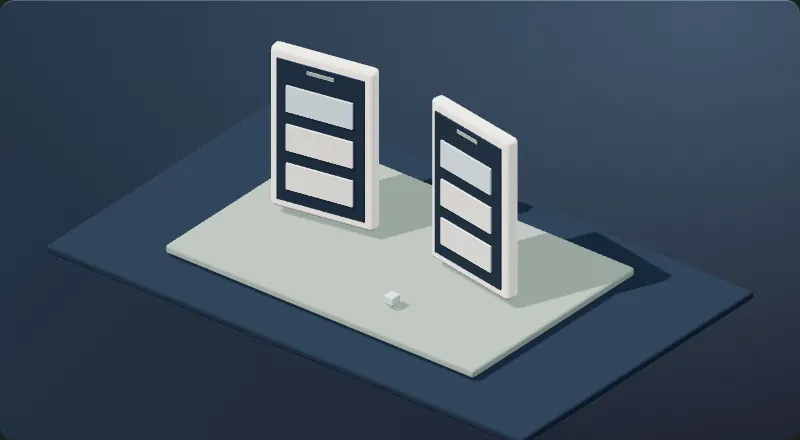 Mobile engineersSwift, Kotlin, Flutter
 Data engineersPipelines, warehouses, BI
 ML & AI engineersLLM apps, RAG, model development
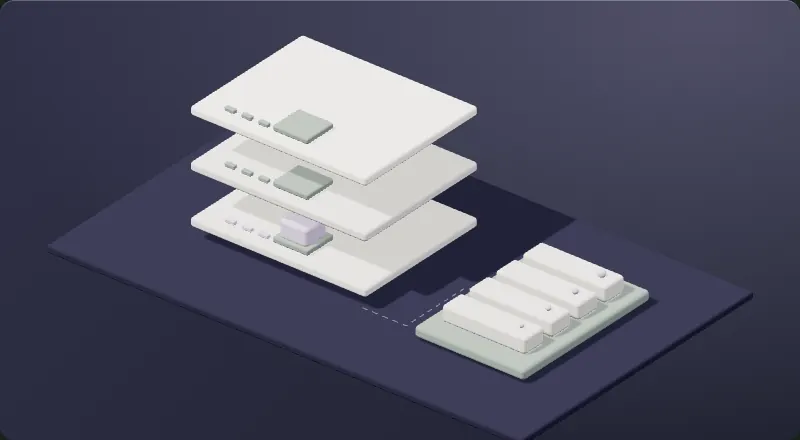 MLOps & DevOps engineersCloud, Kubernetes, CI/CD
 QA engineersManual and automated testing
 Architects & tech leadsSystem design and technical direction
Our vetting process
How we put proven engineers on every team.
Vetted talent
ObjectiveConfirm seniority and a record of delivery at the level the role demands.
- Tenure and scope of responsibility
- Production systems delivered at scale
- Alignment with client stack and domain
ObjectiveEstablish that the engineer can operate inside a client team and represent the work to stakeholders.
- Professional English, spoken and written
- Clear articulation of technical trade-offs
- Dependable collaboration across time zones
ObjectiveVerify technical fundamentals against a role-specific standard.
- Code quality and test discipline
- Architecture and system design
- Proficiency in AI-assisted development
ObjectiveAssess judgment and execution on a representative client problem.
- Representative, time-boxed assignment
- Soundness of approach and trade-offs
- Completeness and clarity of delivery
ObjectiveSenior engineers validate depth, decision-making and accountability before an offer is extended.
- Panel review of the practical challenge
- Design decisions examined in depth
- Ownership, references and final approval
Technologies
Engineers for the stack you already run.











Global talent. Shared ownership.
The right people. One integrated team.
A US company with a global team. Specialist engineers working together around your product.
Build your team →Southern California · US headquarters
↔
Vietnam · Engineering hub
The AIGard advantage
A US company with a global team. What that means for an augmented team.
Managed in your time zone
Our client engagement team is distributed globally. Your product or project manager works your hours and joins your meetings live.
Senior by default
Engineers average eight to ten years of hands-on experience and clear a five-stage vetting process before they meet a client.
30–50% lower cost
Our engineers typically run 30–50% less than the fully loaded cost of a US-based hire, with no recruiting fees, benefits overhead or insurance costs on your side.
How it compares
Staff augmentation against the alternatives.
| Factor | AIGard staff augmentation | Hiring in-house | Typical outsourcing vendor |
|---|---|---|---|
| Cost | Typically 30–50% less than a US-based hire | Full salary, benefits, insurance and recruiting | Lower rates, but often more engineers and more rework |
| Time to start | Typically 2–4 weeks | Often several months | Varies by vendor |
| Vetting | Five-stage process; top 1% accepted | Your own process | Varies by vendor |
| Seniority | 8–10 years average | Depends on the hire | Varies by vendor |
| Communication skills | High English proficiency | Native or fluent | Language barriers are common |
| Hiring, payroll and HR | Handled by AIGard | Handled by you | Handled by the vendor |
| Code and IP | Yours | Yours | Check the contract |
Our performance model
Expect performance. The model is built around it.
Vetted against a five-stage standard
Every engineer has cleared profile review, communication, skills assessment, a practical challenge and a technical interview.
Ongoing performance support
We check in with you and with the engineer regularly, and act early if something is not working.
Continuity built in
If an engineer leaves or is not the right fit, we find a replacement and manage the handover so delivery keeps moving.
Getting started
From first call to working engineers.
01 Scope Week 0Scope
We study your goals, current systems and sprint cadence, then recommend a roadmap, engagement model and team shape. No obligation.
02 Match Weeks 1–3Match
We put forward engineers for your stack. You interview them and approve who joins.
03 Embed Weeks 2–4Embed
The team joins your Slack, stand-ups and repos, and starts on agreed first deliverables.
04 Deliver & scale OngoingDeliver & scale
Regular demos and progress reports. Add or reduce capacity as your roadmap changes.
How we work
Easy to engage. Easy to scale.
Vetting, contracts and delivery, engineered to raise your team’s velocity and cut your overhead.
Vetted Senior Talent
We accept the top 1% of engineers, so you only work with proven talent.
Every engineer is assessed on technical depth, problem-solving and communication before joining a client team. Our engineers average eight to ten years of hands-on experience, so they contribute from the first sprint instead of learning on your budget.
Timezone-Aligned Management
Product and project managers in your time zone, wherever your engineers are.
Our client engagement team is distributed globally. You get a product or project manager who works your hours, joins your meetings live and keeps delivery moving across time zones, so nothing waits overnight for an answer.
AI-Native Engineering
Engineers who build with AI, and build AI into your product.
Our teams use AI tooling across design, coding, testing and documentation to ship faster, and they have production experience with LLM applications, machine learning and MLOps. You get AI capability inside the team rather than from a separate vendor.
Full-Stack Capabilities
One team, from roadmap to production support.
Strategy, product engineering, cloud, data, AI and QA under one roof, across eight practice areas. The people who plan your architecture are the same people who build, ship and run it.
Scalable Teams
Start with one engineer. Grow to several teams.
Add or reduce capacity as your roadmap changes, and move between staff augmentation, dedicated teams and outsourcing without changing partner. We handle hiring, onboarding and replacements.
Standard MSAs & SOWs
Clear paperwork, so work starts sooner.
We work under a master services agreement with a statement of work for each engagement, so scope, responsibilities and terms are written down before anything starts. Adding a team or a project means a new SOW, not a new negotiation.
NDAs & IP Protection
Everything we build belongs to you.
NDAs are signed before any access is given, and IP assignment is part of every contract in every engagement model. Your code, models and data stay yours.
Enterprise-Grade Security
Security handled. Compliance built in.
Engineers work inside your environment under least-privilege access. Our practices align with ISO 27001, SOC 2, GDPR and HIPAA, with PII masking, encryption and audit logging built into data work.
Managed Delivery
We manage delivery, quality and people.
Team leads run sprints, demos and reporting; we handle retention, performance and handovers. You set direction and see progress in the open, without managing every engineer.
FAQ
Staff augmentation. Answered.
What is staff augmentation, and how does it work?
Staff augmentation adds external engineers to your in-house team. They work in your tools and sprints and report to your leads, while AIGard handles sourcing, contracts, payroll and retention.
You keep control of priorities, architecture and delivery. It is the lightest way to add senior capacity or a skill your team lacks, without a long hiring cycle.
When is staff augmentation the right model?
Staff augmentation fits when you have strong engineering leadership and need more capacity, or a specific skill such as AI, mobile or DevOps.
If you would prefer not to manage engineers day to day, a dedicated team is usually the better fit. If you want the whole build delivered for you, consider software outsourcing.
What is the difference between staff augmentation, dedicated teams and software outsourcing?
The difference is how much of the delivery you manage. With staff augmentation, you direct individual engineers inside your own team. A dedicated team is a self-managing AIGard team working against priorities you set. With software outsourcing, AIGard owns delivery of the whole project against milestones you approve.
All three draw on the same vetted engineers and the same contracts, security practices and ownership terms.
How much does staff augmentation cost?
AIGard engineers typically cost 30–50% less than the fully loaded cost of a US-based hire, with no recruiting fees, benefits overhead or insurance costs on your side.
Compared with a typical offshore vendor, you generally need fewer engineers to achieve the same output, because senior engineers write better code faster and reduce rework. The exact figure depends on roles, seniority and headcount; we provide a written proposal after the scoping call.
How quickly can augmented engineers join our team?
Typically within two to four weeks of the first call, depending on the roles and seniority required.
We scope the roles, present vetted candidates for you to interview, and onboard the people you approve into your tools and sprint cadence.
How does AIGard vet its engineers?
Every engineer clears a five-stage process before joining a client team: profile review, communication, skills assessment, a practical challenge and a technical interview with senior engineers.
The process tests delivery record, professional English, code quality, system design and proficiency in AI-assisted development. For staff augmentation and dedicated teams, you then interview and approve each person we put forward.
Can we interview engineers before they join?
Yes. For staff augmentation and dedicated teams, you meet and approve every engineer before they join.
For outsourced projects, AIGard assembles the team and is accountable for its performance; you review progress at demos and approve each milestone.
Do AIGard engineers work in our tools and processes?
Yes. Engineers work in your Slack, Jira, GitHub and cloud accounts, and follow your sprint cadence and review process.
In a dedicated team or an outsourced project, an AIGard team lead runs sprints, demos and reporting, and you see progress in the open.
Which technologies do AIGard engineers work with?
AIGard engineers cover front end, back end, mobile, data, AI and cloud, across more than 40 technologies.
That includes React, Next.js, Angular, Vue, Node.js, Python, Java, .NET, Go, Swift, Kotlin and Flutter, the major cloud platforms, and data and AI tooling. The Technologies page sets out the full list.
Can we scale the team up or down?
Yes. You can start with one engineer and grow to several teams, and add or reduce capacity as the roadmap changes.
AIGard handles hiring, onboarding and replacements, so a change in capacity does not become a recruiting project for your leads.
What happens if an engineer leaves or is not the right fit?
AIGard finds the replacement and manages the handover, so delivery keeps moving and you do not restart a hiring process.
Retention, performance and handovers are our responsibility in every engagement model. If someone is not working out, tell us and we act early.
How does AIGard protect our data and systems?
NDAs are signed before any access is given, and engineers work inside your environment under least-privilege access, with permissions limited to their responsibilities.
Access is reviewed as roles change and removed when work ends. Our practices align with ISO 27001, SOC 2, GDPR and HIPAA, with PII masking, encryption and audit logging built into data work. We review your access policies, data-handling needs and vendor requirements during scoping.
Who owns the code, models and intellectual property?
You do. Intellectual property assignment is written into every contract, in every engagement model.
That covers source code, designs, documentation, data, models and prompts produced for you. Third-party components and their licenses are identified, so ownership is clear at handover.