Full-stack AI solutions
Operationalize AI. Seven areas, from strategy to real-world automation.
 01 / 07
AI Strategy & Enablement
Advisory + foundational setup.
- The point
- Decide where AI earns its place before you fund it.
- Start here when
- You have AI ambitions but no agreed starting point, or pilots that never reached production.
- You leave with
- A prioritized roadmap, a data and governance plan, and the platform decisions to act on it.
 02 / 07
Machine Learning Engineering
From predictive models to production-grade intelligence.
- The point
- Models built to be used, not just trained.
- Start here when
- You have data and a decision you want to predict, classify or optimize.
- You leave with
- Validated models with documented performance, explainability and a path to deployment.
 03 / 07
Generative AI & LLM Solutions
Build next-generation copilots, assistants, and generative systems.
- The point
- Copilots and assistants grounded in your own knowledge.
- Start here when
- Teams lose time finding, summarizing or drafting from information you already hold.
- You leave with
- An assistant wired into your systems, with retrieval, guardrails and evaluation in place.
 04 / 07
Data Engineering & Annotation Services
Fuel AI performance with high-quality, compliant data pipelines.
- The point
- AI is only as good as the data underneath it.
- Start here when
- Data is scattered, unlabeled or not trusted enough to train on.
- You leave with
- Governed pipelines and labeled, quality-checked datasets ready for model work.
 05 / 07
AI Infrastructure & MLOps
Operationalize AI models at enterprise scale.
- The point
- Run models like software: versioned, monitored, repeatable.
- Start here when
- Models work in notebooks but are slow or risky to release and maintain.
- You leave with
- Automated release pipelines, a model registry, monitoring and cost-aware infrastructure.
 06 / 07
Robotics & Edge Intelligence
Where AI meets the physical world.
- The point
- Intelligence that runs where the work happens.
- Start here when
- Decisions have to be made on a device, a line or a vehicle, not in the cloud.
- You leave with
- Perception and control software deployed and tested on your hardware.
 07 / 07
Full AI Lifecycle
End-to-end AI development — from strategy and data to deployment and real-world automation.
- The point
- One team, from first idea to what comes next.
- Start here when
- You want a single partner accountable across strategy, build and operation.
- You leave with
- A running AI capability, and the process to keep improving it.
Key capabilities
What our AI teams build. Across interaction, data and machine learning operations.
Enabling machines to see, speak and understand.
Conversational AI
Chatbots, voice assistants & NLP systems
- AI Chatbots & Virtual AssistantsBuild domain-trained bots that automate customer support, appointment booking, and lead qualification.
- Voice AI & Speech InterfacesDeploy intelligent voice agents for call centers, telehealth triage, and IVR systems.
- LLM Fine-Tuning & CustomizationAdapt large language models to your company’s tone, workflows, and proprietary data.
- Omnichannel IntegrationSeamlessly connect chat, voice, and social channels into unified conversational experiences.
- Analytics & Continuous LearningUse real-time conversation data to improve response accuracy, customer satisfaction, and business KPIs.
Vision AI
Image recognition, computer vision, OCR & medical imaging AI
- Image & Video AnalysisAutomate visual inspection, object detection, and anomaly recognition across clinical, industrial, or retail settings.
- Medical Imaging IntelligenceApply AI to radiology, pathology, and ophthalmology for faster, more accurate diagnostics.
- Computer Vision Model DevelopmentTrain and deploy custom CNNs and transformers for classification, segmentation, and tracking tasks.
- Edge & Cloud DeploymentIntegrate AI vision models with cameras, IoT devices, or cloud workflows for real-time performance.
- Data Annotation & Model OptimizationProvide human-in-the-loop labeling, quality assurance, and continuous retraining to improve accuracy.
Unlimited Reality
Immersive & spatial computing, AR/VR/XR integrations
- Immersive Training & SimulationBuild hyper-realistic VR/AR environments for medical, industrial, or enterprise training.
- Digital Twins & 3D VisualizationCreate real-time digital replicas of physical assets, facilities, or patients for monitoring and planning.
- Mixed Reality CollaborationEnable remote teams to interact with 3D data, prototypes, or clinical imagery in shared virtual spaces.
- Metaverse & Spatial Experience DesignDevelop custom virtual worlds and brand experiences powered by AI and interactive storytelling.
- AI-Enhanced Content CreationGenerate lifelike avatars, procedural environments, and adaptive simulations with generative AI.
Turning data into actionable intelligence.
Data Preparation
Data engineering, cleaning and labeling
- Data Collection & IntegrationAggregate structured and unstructured data from multiple sources into unified, analysis-ready datasets.
- Data Cleaning & NormalizationDetect and correct errors, fill gaps, and standardize data formats for consistent quality.
- Annotation & Labeling ServicesProvide high-quality human and AI-assisted labeling for images, text, audio, and medical data.
- Synthetic Data GenerationAugment limited real-world datasets with synthetic, privacy-safe data.
- Pipeline Automation & GovernanceAutomate ingestion and validation, with lineage and access controls across the data lifecycle.
Advanced Analytics
Predictive modeling and statistical analysis
- Predictive & Prescriptive ModelingUse machine learning to forecast trends, optimize operations, and recommend next-best actions.
- Statistical & Econometric AnalysisApply advanced quantitative methods to uncover correlations, causal impacts, and performance drivers.
- Customer & Behavioral AnalyticsSegment users, predict churn, and personalize engagement using data-driven insights.
- Operational & Financial OptimizationModel demand, pricing, and resource allocation to maximize efficiency and profitability.
- AI Model IntegrationEmbed analytics models into existing workflows, enabling continuous learning and real-time decision support.
Insights & Visualization
Dashboards, BI tools and storytelling with data
- Data Dashboards & BI ToolsBuild interactive dashboards that turn complex datasets into actionable insights for executives and analysts.
- Real-Time AnalyticsEnable live monitoring of operations, patient outcomes, or business KPIs with automated data pipelines.
- AI-Powered Insight GenerationUse machine learning and NLP to surface hidden patterns, anomalies, and predictive trends.
- Custom Visualization DesignCreate intuitive, human-centered visualizations for data storytelling across web, mobile, and AR/VR platforms.
- Decision Intelligence SystemsCombine analytics, simulation, and AI-driven recommendations to support strategic decision-making.
Building, deploying & maintaining scalable AI systems.
ML & Deep Learning
Model design, training and fine-tuning
- Model Development & TrainingDesign and train supervised, unsupervised, and reinforcement learning models tailored to your business goals.
- Neural Network Architecture DesignBuild and optimize CNNs, RNNs, Transformers, and hybrid architectures for complex data types.
- End-to-End MLOpsImplement scalable pipelines for model deployment, monitoring, retraining, and version control.
- Custom AI ApplicationsIntegrate ML models into real-world products for predictive analytics, automation, and personalization.
- Performance OptimizationAccelerate training and inference with distributed computing, GPU optimization, and model compression.
ML Deployment & MLOps
CI/CD pipelines, monitoring and automation
- End-to-End Pipeline AutomationStreamline data ingestion, model training, validation, and deployment with CI/CD workflows.
- Model Serving & MonitoringDeploy models seamlessly to production environments with real-time performance tracking and alerting.
- Scalable InfrastructureBuild robust cloud-native or hybrid environments using Kubernetes, Docker, and microservice architectures.
- Versioning & GovernanceManage datasets, models, and experiments with full traceability and compliance across lifecycles.
- Continuous Learning SystemsEnable automated retraining and optimization loops to keep models accurate as data evolves.
Model Management & Maintenance
Lifecycle management, retraining and governance
- Lifecycle ManagementOversee every stage of your models—from development and deployment to retirement—with full transparency and control.
- Performance MonitoringContinuously track model drift, data quality, and prediction accuracy using automated dashboards and alerts.
- Model Retraining & UpdatingImplement scheduled or event-triggered retraining to keep models aligned with new data and business needs.
- Auditability & ComplianceMaintain detailed logs, version control, and documentation to meet governance and regulatory standards.
- Optimization & Cost EfficiencyTune models and infrastructure for peak performance while minimizing compute and storage costs.
How we work
AI engineers, or a full AI team. Three ways to engage, at any stage.
Staff Augmentation
A few engineers join your team. You lead the work; we handle hiring and HR.
Explore Staff AugmentationDedicated Teams
Stable AIGard teams deliver several projects in parallel against your roadmap.
Explore Dedicated TeamsSoftware Outsourcing
Hand us the outcome. We scope, build, ship and support it.
Explore Software OutsourcingSelected team experience
AI our team has put into production. Agentic commerce, conversational AI and diagnostic machine learning, among others.
Agentic Commerce for Distribution
Connecting enterprise data, product intelligence and commercial execution.
Read the case studyAll Health
Conversational AI connected to diagnostic data and clinical care.
Read the case studyApplied AI in Healthcare
Diagnostic AI embedded in the clinician workflow.
Read the case studySmart Clinic
One operating platform for a multi-city healthcare network.
Read the case studyTelemedicine App
Specialist access connected to the next step in care.
Read the case study





Partner Pharmacy Platform
A commerce and supply platform for 3,600 partner pharmacies.
Read the case study
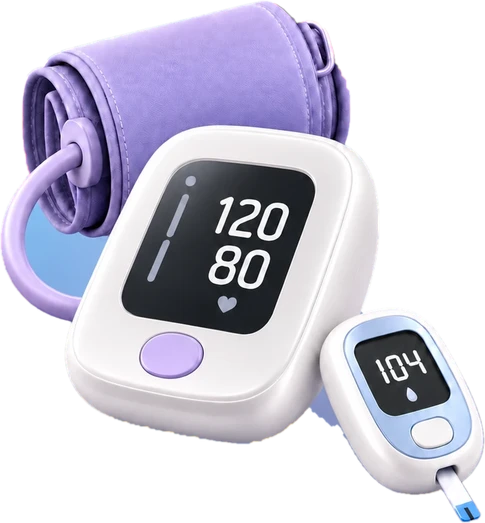

Remote Disease Management
Connecting home monitoring to health-plan action.
Read the case studyReported project figures. Selected experience of the team behind AIGard.
Why AIGard for AI
Make AI transformation real. Then show that it is working.
From scattered pilots to measured outcomes
We map the opportunities, pick one high-value area to start, build it, and measure the result against a metric agreed at the outset.
Production systems, not slide decks
The assessment and the engineering happen in the same engagement, led by the same team. The plan is followed by working software.
Progress you can defend
We measure at team level, with measures such as cycle time from idea to production, throughput and defect rates, not individual typing speed.
Capability built inside your team
We build with your engineering leads, document the playbook behind the work, and coach them so they can take on the next use case themselves.
Team-level gains, not just faster individuals
AI coding tools speed up individuals; team throughput depends on what happens between them. We build workflows that take on whole categories of work.
Our methodology
Assess, prove, scale. Each phase ends with something you can use.
Assess
We review where AI fits across your work, your data and systems, and your team’s readiness. You leave with a gap analysis, a prioritized roadmap and an outcome metric for the next phase.
Prove
We build one complete AI workflow in a single business area, with the prompts, review rules and governance needed to run it. You leave with a deployed system and a measured result.
Scale
We work with your engineering leads to extend the approach to further areas, documenting the playbook and coaching your team, with regular reviews of what is working.
Technologies
Specialists who use your stack.







Our talent
Engineers across every discipline. Add one specialist or several, all vetted and senior.

 Front-end engineersReact, Next.js, Angular, Vue
 Back-end engineersNode.js, Python, Java, .NET, Go
 Mobile engineersSwift, Kotlin, Flutter
 Data engineersPipelines, warehouses, BI
 ML & AI engineersLLM apps, RAG, model development
 MLOps & DevOps engineersCloud, Kubernetes, CI/CD
 QA engineersManual and automated testing
 Architects & tech leadsSystem design and technical direction
Our vetting process
How we put proven engineers on every project.
Vetted talent
ObjectiveConfirm seniority and a record of delivery at the level the role demands.
- Tenure and scope of responsibility
- Production systems delivered at scale
- Alignment with client stack and domain
ObjectiveEstablish that the engineer can operate inside a client team and represent the work to stakeholders.
- Professional English, spoken and written
- Clear articulation of technical trade-offs
- Dependable collaboration across time zones
ObjectiveVerify technical fundamentals against a role-specific standard.
- Code quality and test discipline
- Architecture and system design
- Proficiency in AI-assisted development
ObjectiveAssess judgment and execution on a representative client problem.
- Representative, time-boxed assignment
- Soundness of approach and trade-offs
- Completeness and clarity of delivery
ObjectiveSenior engineers validate depth, decision-making and accountability before an offer is extended.
- Panel review of the practical challenge
- Design decisions examined in depth
- Ownership, references and final approval
Getting started
From first call to a working team.
Align on goals and current state
We start with your business goals, existing systems and the blockers keeping the work from moving.
Prioritize the highest-impact path
We identify the opportunities with the strongest case and define the technical work to deliver them.
Assemble your team
We select and onboard the architects, engineers and specialists best suited to the work.
How we work
Easy to engage. Easy to scale.
Vetting, contracts and delivery, engineered to raise your team’s velocity and cut your overhead.
Vetted Senior Talent
We accept the top 1% of engineers, so you only work with proven talent.
Every engineer is assessed on technical depth, problem-solving and communication before joining a client team. Our engineers average eight to ten years of hands-on experience, so they contribute from the first sprint instead of learning on your budget.
Timezone-Aligned Management
Product and project managers in your time zone, wherever your engineers are.
Our client engagement team is distributed globally. You get a product or project manager who works your hours, joins your meetings live and keeps delivery moving across time zones, so nothing waits overnight for an answer.
AI-Native Engineering
Engineers who build with AI, and build AI into your product.
Our teams use AI tooling across design, coding, testing and documentation to ship faster, and they have production experience with LLM applications, machine learning and MLOps. You get AI capability inside the team rather than from a separate vendor.
Full-Stack Capabilities
One team, from roadmap to production support.
Strategy, product engineering, cloud, data, AI and QA under one roof, across eight practice areas. The people who plan your architecture are the same people who build, ship and run it.
Scalable Teams
Start with one engineer. Grow to several teams.
Add or reduce capacity as your roadmap changes, and move between staff augmentation, dedicated teams and outsourcing without changing partner. We handle hiring, onboarding and replacements.
Standard MSAs & SOWs
Clear paperwork, so work starts sooner.
We work under a master services agreement with a statement of work for each engagement, so scope, responsibilities and terms are written down before anything starts. Adding a team or a project means a new SOW, not a new negotiation.
NDAs & IP Protection
Everything we build belongs to you.
NDAs are signed before any access is given, and IP assignment is part of every contract in every engagement model. Your code, models and data stay yours.
Enterprise-Grade Security
Security handled. Compliance built in.
Engineers work inside your environment under least-privilege access. Our practices align with ISO 27001, SOC 2, GDPR and HIPAA, with PII masking, encryption and audit logging built into data work.
Managed Delivery
We manage delivery, quality and people.
Team leads run sprints, demos and reporting; we handle retention, performance and handovers. You set direction and see progress in the open, without managing every engineer.
FAQ
AI transformation. Answered.
What is AI transformation?
AI transformation is the work of moving an organization from isolated AI experiments to AI that runs reliably inside its products and operations.
In practice that means selecting use cases with a sound business case, building the data foundation they depend on, engineering and deploying the systems, putting governance around them, and leaving your team able to extend the work.
Do we need to commit to a full transformation program?
No. Some clients want the full sequence; others need one piece, such as a readiness assessment, a data foundation, governance, or one AI workflow in one business area.
We shape the engagement around what you need in order to move forward.
What if we are not sure which AI use case to start with?
That is the usual starting point. We help you evaluate which opportunities have a strong business case, which your data and systems can support, and what needs to be true before you build.
From there we define the first use case and the technical path to production.
How is this different from a typical AI consulting engagement?
The strategy, the engineering and the capability transfer happen in one engagement with one team.
The objective is working systems in production and a team that can extend them, not a roadmap you are left to implement alone.
How do you measure whether an AI initiative is working?
Against a metric agreed at the start and measured at team level.
Typical measures are cycle time, throughput on the workstream, and defect rates holding steady as speed increases. Agreeing the metric first keeps the work tied to a business result rather than to activity.
Which engagement model does AI work use?
Any of the three. You can add AI engineers to your team through staff augmentation, have a dedicated AI team run a workstream, or hand AIGard a defined AI project end to end.
The choice depends on how much of the delivery you want to manage.
How does AIGard handle data privacy and security in AI work?
NDAs are signed before any access is given, and engineers work inside your environment under least-privilege access. Privacy and security controls for each AI use case are defined up front.
We agree which AI tools and models may access your code and data, including retention and training settings. Agents operate within defined permissions, with human approval for sensitive actions.
Do AIGard engineers have production AI experience?
Yes. The team’s experience includes conversational AI with retrieval over a medical reference corpus, diagnostic machine learning, and agentic commerce with managed model lifecycles.
The case studies describe the scope of each.
Who owns the models, prompts and code?
You do. IP assignment is part of every contract.
That includes models, prompts, evaluation sets, pipelines and source code produced for you.
How quickly can AIGard engineers start?
Engineers typically start within two to four weeks of the scoping call. The exact date depends on the roles, seniority and number of people required.
We confirm a realistic start date in writing before you commit, and you meet the proposed engineers before work begins.
How much does it cost to work with AIGard?
AIGard engineers typically cost 30–50% less than the fully loaded cost of a comparable US-based hire, with no recruiting fees, benefits overhead or insurance costs on your side.
The figure for a specific engagement depends on the model, the roles, the seniority mix and the size of the team. We issue a written proposal after the scoping call, so the commercial terms are agreed before any work starts.