The business mandate
The mandate.
Scale a physical care network without fragmenting the patient record or the service experience. Booking, insurance, consultations, investigations, billing and dispensing needed to work together across facilities and specialties, with common clinical pathways and operating standards.
Executive priorities
- Scale the network. Shared data and workflows supported coordinated service delivery across multiple cities.
- Connect the revenue journey. Booking, preauthorization, billing and dispensing were linked within the patient journey.
- Make the clinical record actionable. Longitudinal information, source diagnostics and shared consultation displays supported care delivery.
One connected record, across the care journey. Patient access, facility operations, consultation, diagnostics and pharmacy services connected through a shared clinical operating platform.
Diagnostic results return to the EMR; the shared record supports subsequent visits.
Queues, navigation, clinical pathways and shared operating standards.
Insurance preauthorization, integrated billing and point of sale.
History, source diagnostics, documentation, findings and prescriptions.
One coordinated operating model: the shared platform supports clinical and administrative workflows across facilities. This is a conceptual service journey; investigations and dispensing depend on the individual care plan. Reported figures describe network-level scale, not software-only impact or clinical outcomes.
Reported scale and delivery
What was delivered. At what scale.
The network reported 500,000 patients served, 250,000 annual visits, 150% patient growth CAGR and 2,000 enterprise clients. The platform supported that operating scale through coordinated records, facility workflows and downstream services. These are network-level results; software was one component of the broader operating model.
Reported project figures. Selected experience of the team behind AIGard.
From scope to operations
The capabilities that connected the service journey.
Patient access through payment
Web and mobile booking connected to patient intake, insurance preauthorization, integrated billing and point of sale, bringing clinical access and administrative completion into the same operating environment.
Coordinated clinical operations
Queue management, facility navigation and structured pathways organized movement through consultation, investigation and dispensing. Shared standards and SOPs supported consistency across locations.
A proprietary longitudinal EMR
Patient-facing and provider-facing interfaces connected medical history, documentation, findings and prescriptions, with multilingual documentation and ICD-9 and ICD-10 coding.
Consultations built around a shared view
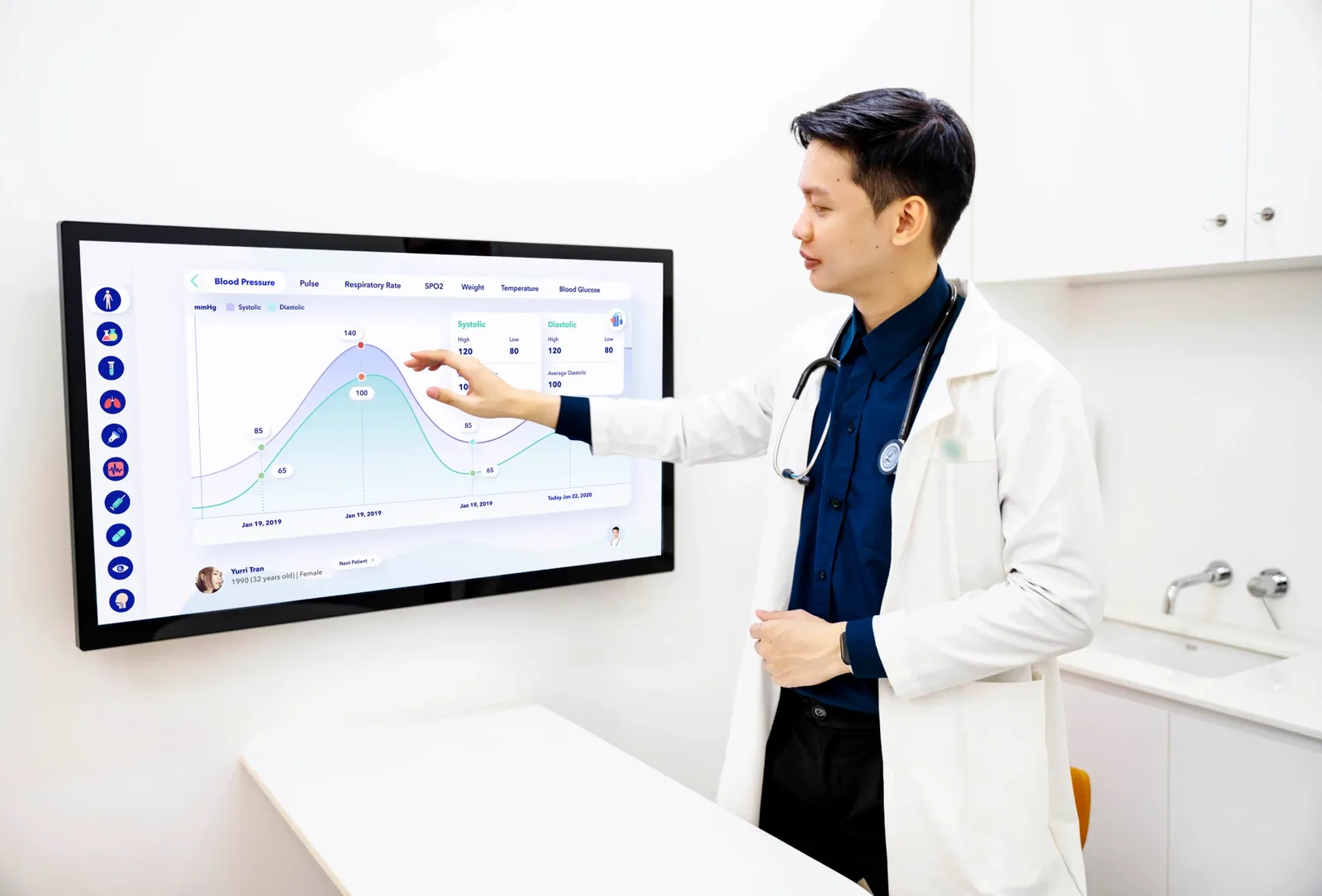
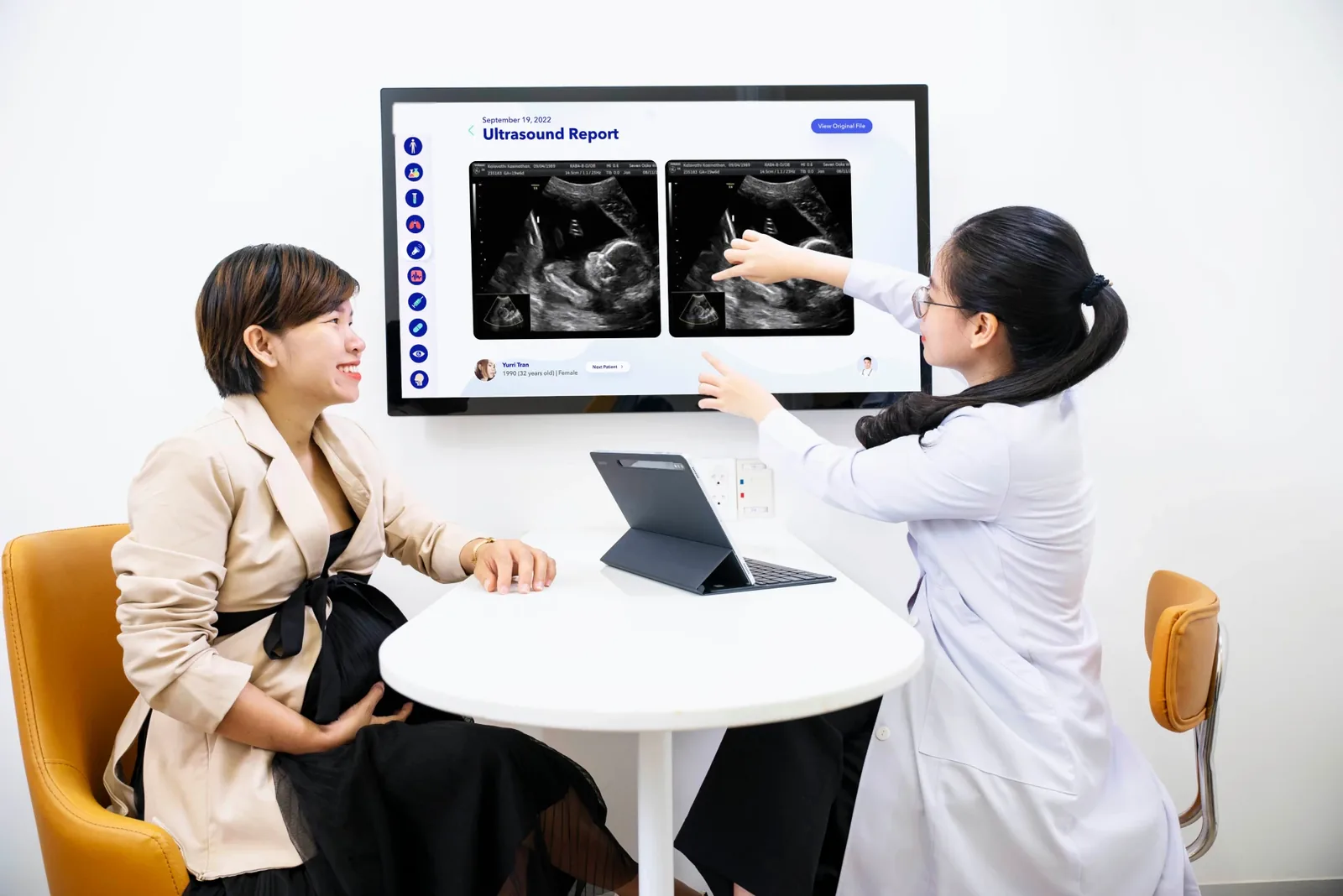
Samsung touchscreens made the clinical record a shared surface during the encounter, so clinicians could explain findings, review a timeline and discuss care plans with the patient.
Diagnostics and fulfillment connected to care
X-ray, ultrasound, endoscopy and ophthalmic imaging integrations brought diagnostic outputs into the EMR. Electronic prescriptions connected to on-site dispensing and home delivery with route tracking.
Governance and control
Structured coding, multilingual documentation and diagnostic source outputs connected the medical record with common clinical pathways across facilities.
Technology and integration
The platforms behind delivery.
- Web application frameworks
- React, Angular
- Mobile application languages
- Swift, Kotlin
- Application services
- .NET, Java
- Databases
- PostgreSQL, MySQL
- Cloud infrastructure
- AWS
- Communications services
- Twilio, Mailchimp
- Clinical interfaces and devices
- Samsung consultation touchscreens; GE and Samsung ultrasound systems; X-ray, endoscopy and ophthalmic imaging integrations
- Delivery integrations
- Grab and other last-mile delivery providers
- Clinical coding
- ICD-9, ICD-10
The stack spans multiple applications and clinical integrations; it does not imply that every component was used within a single application. Technologies, equipment brands and companies are named to describe the work. They do not indicate endorsement or direct AIGard client relationships.
Relevance to enterprise leaders
A platform for healthcare operators that need clinical depth and enterprise coordination in the same system. The experience spans consumer access, facility operations, clinical software, equipment integration and last-mile fulfillment.
Discuss an integrated platform for your clinical network.
Schedule a Call →More team experience
Other platforms our team has built.

Telemedicine App
Specialist access connected to the next step in care.
Read the case study

Partner Pharmacy Platform
A commerce and supply platform for 3,600 partner pharmacies.
Read the case study
Remote Disease Management
Connecting home monitoring to health-plan action.
Read the case studyFAQ
Smart Clinic: frequently asked questions
What was delivered in the Smart Clinic project?
The team connected the clinical, administrative and fulfillment journey in one platform spanning patient access, facility operations, the medical record, diagnostics and pharmacy services. The system supported a network serving 500,000 patients and 250,000 annual visits.
The network reported 500,000 patients served, 250,000 annual visits, 150% patient growth CAGR and 2,000 enterprise clients. The platform supported that operating scale through coordinated records, facility workflows and downstream services. These are network-level results; software was one component of the broader operating model.
What business problem did Smart Clinic address?
The mandate was to scale a physical care network without fragmenting the patient record or the service experience. Booking, insurance, consultations, investigations, billing and dispensing needed to work together across facilities and specialties, with common clinical pathways and operating standards.
What capabilities did the Smart Clinic work include?
The work connected the following capabilities:
- Patient access through payment. Web and mobile booking connected to patient intake, insurance preauthorization, integrated billing and point of sale, bringing clinical access and administrative completion into the same operating environment.
- Coordinated clinical operations. Queue management, facility navigation and structured pathways organized movement through consultation, investigation and dispensing. Shared standards and SOPs supported consistency across locations.
- A proprietary longitudinal EMR. Patient-facing and provider-facing interfaces connected medical history, documentation, findings and prescriptions, with multilingual documentation and ICD-9 and ICD-10 coding.
- Consultations built around a shared view. Samsung touchscreens made the clinical record a shared surface during the encounter, so clinicians could explain findings, review a timeline and discuss care plans with the patient.
- Diagnostics and fulfillment connected to care. X-ray, ultrasound, endoscopy and ophthalmic imaging integrations brought diagnostic outputs into the EMR. Electronic prescriptions connected to on-site dispensing and home delivery with route tracking.
- Governance and control. Structured coding, multilingual documentation and diagnostic source outputs connected the medical record with common clinical pathways across facilities.
Which technologies were used in Smart Clinic?
The reported technology and integration scope was:
- Web application frameworks: React, Angular
- Mobile application languages: Swift, Kotlin
- Application services: .NET, Java
- Databases: PostgreSQL, MySQL
- Cloud infrastructure: AWS
- Communications services: Twilio, Mailchimp
- Clinical interfaces and devices: Samsung consultation touchscreens; GE and Samsung ultrasound systems; X-ray, endoscopy and ophthalmic imaging integrations
- Delivery integrations: Grab and other last-mile delivery providers
- Clinical coding: ICD-9, ICD-10
The stack spans multiple applications and clinical integrations; it does not imply that every component was used within a single application.
Are the figures in the Smart Clinic case study AIGard client results?
They are reported project figures and describe selected experience of the team behind AIGard.
The case study separates delivered scope and reported scale from measured outcomes. Technology and company references describe the work; they do not imply endorsement or a direct AIGard client relationship.
Which organizations is the Smart Clinic experience relevant to?
A platform for healthcare operators that need clinical depth and enterprise coordination in the same system. The experience spans consumer access, facility operations, clinical software, equipment integration and last-mile fulfillment.
Can AIGard build something similar for us?
Yes. The same disciplines are available through staff augmentation, dedicated teams or software outsourcing.
Tell us what you are building, and on a 30-minute call we will recommend an engagement model, a team shape and first milestones.
How does AIGard protect our data and systems?
NDAs are signed before any access is given, and engineers work inside your environment under least-privilege access, with permissions limited to their responsibilities.
Access is reviewed as roles change and removed when work ends. Our practices align with ISO 27001, SOC 2, GDPR and HIPAA, with PII masking, encryption and audit logging built into data work. We review your access policies, data-handling needs and vendor requirements during scoping.
How quickly can AIGard engineers start?
Engineers typically start within two to four weeks of the scoping call. The exact date depends on the roles, seniority and number of people required.
We confirm a realistic start date in writing before you commit, and you meet the proposed engineers before work begins.